
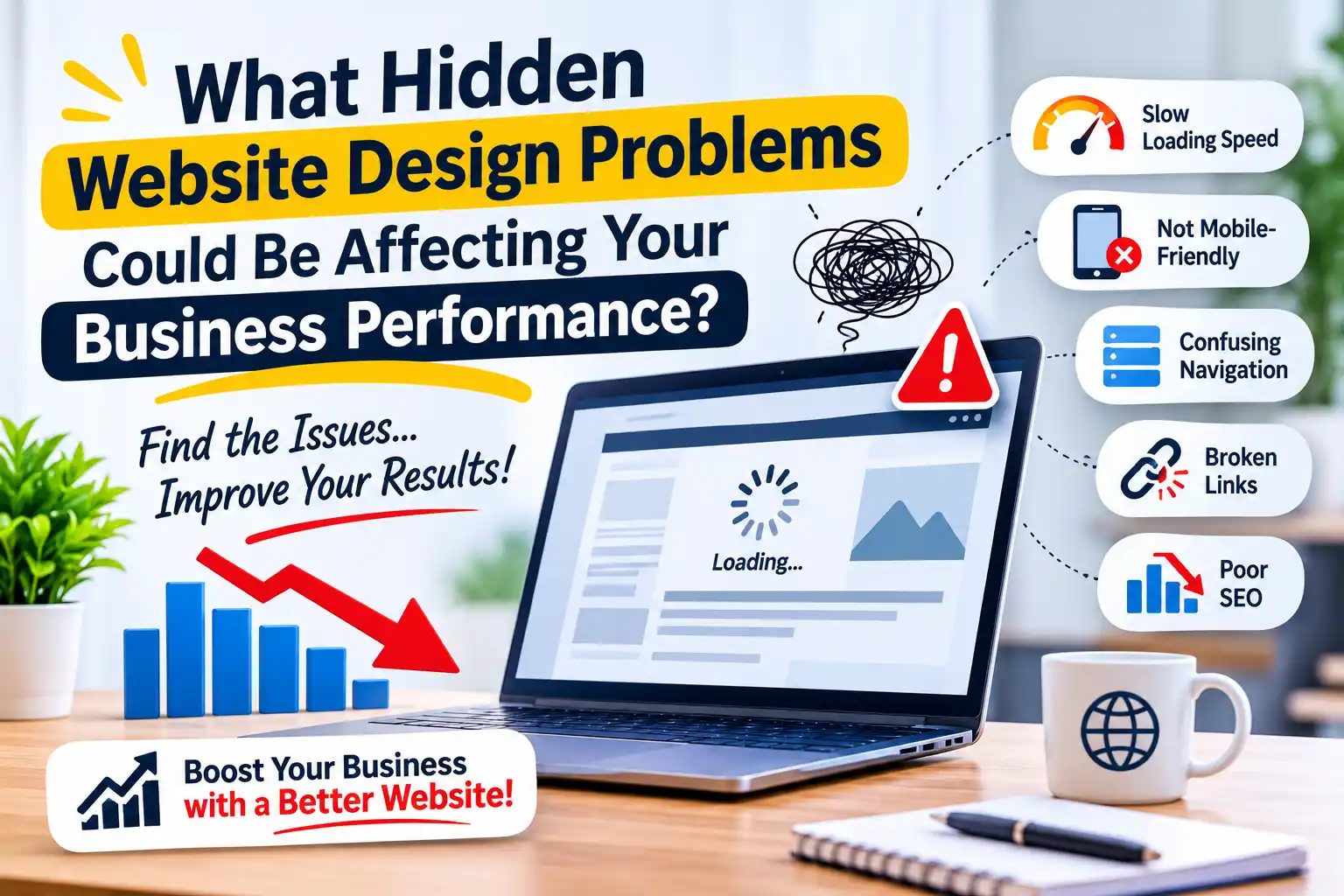
A business website is more than an online presence; it is a powerful tool for attracting visitors, building credibility, and generating leads. However, several hidden website design problems can silently affect its performance without business owners noticing them. Issues such as slow loading speed, confusing navigation, poor mobile responsiveness, and ineffective page layouts can drive potential customers away. Working with an experienced Website Designing Company in Laxmi Nagar can help identify these problems and create a website that supports your business goals. Understanding these hidden issues is the first step towards improving user experience, increasing engagement, and achieving better online results.
Website loading speed is one of the most important factors influencing user experience. Modern internet users expect websites to load quickly, and even a few seconds of delay can encourage visitors to leave before exploring your services or products.
A slow website may result from oversized images, unnecessary plugins, unoptimised CSS and JavaScript files, poor hosting infrastructure, or excessive third-party scripts. Although these issues may not be immediately visible during website browsing, they can significantly affect overall performance.
Slow-loading pages can also reduce the number of visitors who complete important actions, such as submitting enquiry forms, making purchases, or contacting your business. Additionally, page speed contributes to Google's overall page experience assessment.
To address this problem, businesses should compress images, enable browser caching, minimise unnecessary scripts, use reliable hosting, and implement efficient coding practices. Regular speed testing through tools such as Google PageSpeed Insights can help identify performance bottlenecks.
A website that looks attractive on a desktop screen may not provide the same experience on smartphones or tablets. Since many customers browse websites through mobile devices, poor mobile responsiveness can create a significant barrier to business growth.
Common problems include overlapping text, incorrectly positioned images, buttons that are difficult to tap, horizontal scrolling, and content that does not fit smaller screens. These design issues make it difficult for visitors to understand your offerings or complete desired actions.
A responsive website automatically adjusts its layout, images, typography, and navigation according to different screen sizes. This ensures that users receive a consistent browsing experience regardless of the device they use.
Businesses should test their websites across multiple screen sizes and browsers. They should also ensure that menus are easy to access, forms are simple to complete, and important buttons remain clearly visible.
Website navigation plays a major role in helping visitors explore different sections of a website. When menus are poorly organised or important information is difficult to locate, users may become frustrated and leave.
For example, a customer visiting a service-based business website should be able to find service details, pricing information, company background, and contact options without unnecessary effort.
Poor navigation often results from too many menu items, unclear category names, inconsistent page structures, missing internal links, and complicated dropdown menus. These problems can also make it difficult for search engines to understand the relationship between different website pages.
A well-structured navigation system should follow a logical hierarchy. Use descriptive menu labels, organise related pages into meaningful categories, and include clear calls to action. A visible navigation menu and properly organised footer can make information easier to access.
Visual hierarchy determines how visitors notice and process information on a webpage. When every heading, image, button, and paragraph competes for attention, users may struggle to understand what matters most.
For instance, a homepage without a clear headline or prominent service section may fail to communicate what a business offers. Similarly, important enquiry buttons can easily get overlooked when they blend into the surrounding content.
Effective visual hierarchy uses appropriate font sizes, colour contrast, spacing, alignment, and content positioning to guide visitors through a page. The most important information should receive greater visual prominence.
Businesses should prioritise their main value proposition, highlight important services, and use consistent typography throughout the website. Attractive design elements should support readability rather than distract visitors from the primary message.
A website can attract considerable traffic but still generate very few enquiries if visitors do not know what to do next. This often happens when call-to-action (CTA) buttons are missing, poorly positioned, or written with unclear messaging.
A CTA guides users towards a specific action, such as requesting a quotation, booking a consultation, purchasing a product, or contacting the business.
Common CTA-related problems include:
Using vague button text that does not explain the next step.
Placing important buttons where visitors rarely notice them.
Choosing colours that do not provide sufficient contrast.
Including too many competing actions on a single page.
Making enquiry forms unnecessarily long or complicated.
Businesses should use clear action-oriented phrases such as "Get a Free Quote", "Contact Us", or "Book a Consultation". Placing relevant CTAs near service descriptions and important content sections can make the customer journey more effective.
Website design and content work together to communicate information effectively. Even valuable content may fail to engage visitors when it is presented in large text blocks, inconsistent formatting, or poorly organised sections.
Long paragraphs, unclear headings, insufficient spacing, and difficult-to-read fonts can make webpages exhausting to browse. Visitors generally prefer content that helps them find relevant information quickly.
A good content layout should include descriptive headings, short paragraphs, relevant images, readable typography, and sufficient white space. Each section should have a clear purpose and connect naturally with the next.
Businesses should also avoid placing too much information above the fold. Instead, organise content into meaningful sections so visitors can explore services, understand benefits, and find answers without feeling overwhelmed.
Broken links and outdated website elements can damage user confidence and create unnecessary browsing difficulties. A visitor clicking a service link that leads to a 404 error page may assume that the business website is poorly maintained.
These issues can occur when pages are deleted without redirects, URLs are changed, external resources become unavailable, or website updates are not properly checked.
Outdated contact details, old promotional banners, expired offers, and incorrect business information can also create confusion.
Businesses should regularly audit their websites to identify broken internal and external links. Updating outdated information, fixing incorrect URLs, and implementing suitable 301 redirects can improve website usability and help search engines discover the correct pages.
Website security is another important factor that directly influences customer confidence. Visitors may hesitate to share personal information or make online payments if a website appears unsafe or unreliable.
An expired SSL certificate, missing HTTPS connection, outdated software, insecure contact forms, and neglected security updates can expose websites to potential risks.
Apart from technical security, trust signals also influence customer decisions. Missing business information, unclear privacy policies, outdated testimonials, and incomplete contact details may make visitors question the credibility of a company.
Businesses should maintain valid SSL certificates, update their website software, use secure forms, and display accurate contact information. Adding genuine customer reviews, clear service details, and transparent policies can further strengthen online trust.
Identifying website design problems requires more than checking whether a website looks visually appealing. A professional evaluation considers technical performance, usability, mobile compatibility, accessibility, content structure, and conversion opportunities.
An experienced Website Designing Company in Laxmi Nagar can assess these elements and recommend improvements based on the specific requirements of a business.
A professional website audit generally focuses on:
Performance analysis: Checking loading speed, image optimisation, server response, and unnecessary scripts.
Responsive design testing: Evaluating website layouts across smartphones, tablets, and desktops.
Navigation assessment: Identifying confusing menus, broken links, and difficult user journeys.
Conversion analysis: Reviewing CTA placement, enquiry forms, and important customer interaction points.
SEO and technical checks: Examining heading structures, metadata, indexing issues, and internal linking.
Choosing the Best Website Designing Company in Laxmi Nagar can help businesses address these challenges through a structured design and development approach. Instead of making random visual changes, professionals can prioritise improvements that support usability, accessibility, and business performance.
Businesses with limited budgets can also explore Affordable Web Design Services in Laxmi Nagar to improve essential website elements without compromising important functionality. Whether it involves redesigning existing pages or developing a completely new website, the focus should remain on delivering a reliable user experience.
A dependable Web Design Company in Laxmi Nagar should also consider long-term maintenance, scalability, and changing customer expectations while developing a website. These factors help ensure that the website continues to support business growth.
Hidden website design problems can gradually affect customer engagement, online visibility, and business growth. From slow loading speed and confusing navigation to weak visual hierarchy and security concerns, even small issues can create significant obstacles in the customer journey.
Businesses should regularly evaluate their websites instead of focusing only on appearance. Identifying performance gaps, improving mobile usability, simplifying navigation, and strengthening website security can create a more effective digital experience. An experienced Website Designing Company in Laxmi Nagar can help identify these issues and implement practical solutions. With the right improvements and ongoing maintenance, businesses can build a user-friendly website that supports their long-term goals. Saiway Tech helps businesses focus on effective website design and development solutions that support a stronger online presence.
