
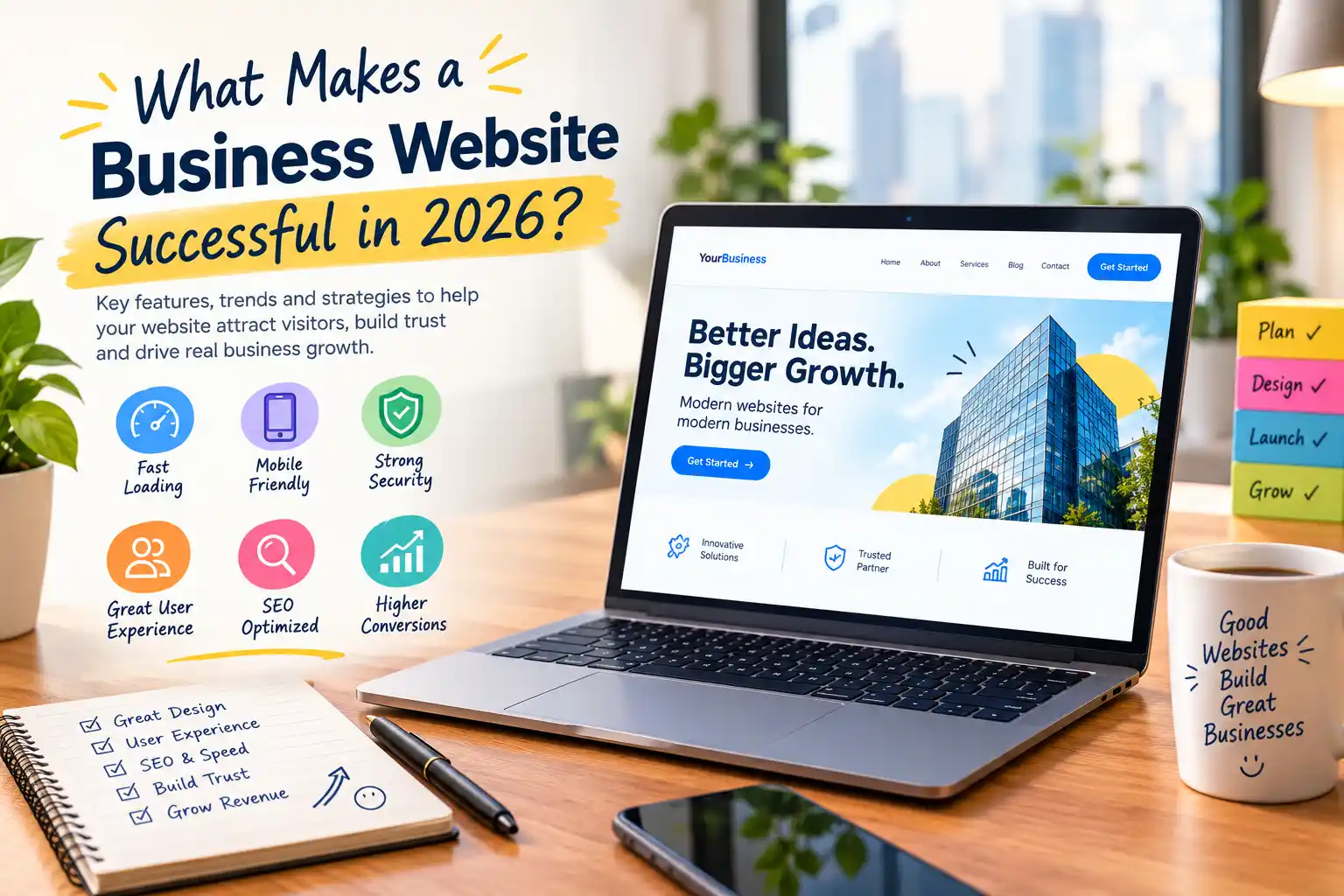
A successful business website in 2026 needs to do much more than look attractive. It should provide a smooth user experience, communicate a clear brand message, load quickly, appear in relevant search results, and turn visitors into customers. As online competition increases, businesses need websites that combine modern design with practical functionality and measurable results. Choosing a reliable Website Designing Company in Noida Sector 18 can help businesses build a strong digital presence that supports customer engagement, lead generation, and long-term growth.
Whether you operate a local service business, an online store, or a professional consultancy, your website often shapes a customer's first impression of your brand. Understanding the essential elements of an effective business website can help you make smarter decisions about design, development, and digital marketing.
Every successful business website starts with a clear purpose. Visitors should quickly understand what your company offers, who your services are intended for, and why they should consider choosing you over competitors.
A confusing homepage, inconsistent branding, or vague service descriptions can make potential customers leave before exploring your offerings. Your website should communicate your value proposition through concise headings, relevant images, and straightforward messaging.
Brand identity also matters. Consistent colours, typography, logos, and visual elements help create a recognisable online presence. However, visual consistency should support readability rather than distract visitors from important information.
For example, a consultancy website should make its expertise and services easy to understand, while an e-commerce website should prioritise product information, pricing, and a convenient purchasing process.
Before designing your website, identify your primary audience and the actions you want visitors to take. This foundation makes it easier to create pages that support your business objectives instead of focusing solely on appearance.
Building an effective website requires a balance between creativity, technical expertise, and business strategy. An experienced design partner can help translate your requirements into a website that serves both your customers and your organisation.
When evaluating the Best Web Design Company in Noida Sector 18, look beyond portfolio images and attractive layouts. Consider whether the provider understands user experience, conversion optimisation, accessibility, mobile responsiveness, and search engine requirements.
A professional design process should begin with understanding your business goals. The designer should identify your target audience, review competing websites, plan the navigation structure, and determine which features will provide genuine value.
For instance, a local service provider may need prominent enquiry buttons, service-specific landing pages, customer testimonials, and a simple contact form. An online retailer may require product filters, secure checkout, inventory integration, and order tracking.
The right partner will recommend features based on your needs rather than adding unnecessary complexity. This approach helps create a website that is easier to maintain, more useful to customers, and better aligned with your long-term growth plans.
Customers increasingly use smartphones to research businesses, compare services, read reviews, and make purchasing decisions. A website that works well only on desktop computers can lose valuable opportunities.
Responsive web design allows pages to adapt to different screen sizes while maintaining readable text, accessible navigation, and functional buttons. Visitors should be able to browse your services or complete an enquiry without zooming in or struggling with poorly positioned elements.
Test your website on different smartphones, tablets, and desktop screens. Check that menus open correctly, images resize properly, forms are easy to complete, and important contact details remain visible.
Mobile usability also supports search performance because Google primarily uses the mobile version of a website's content for indexing. A consistent experience across devices therefore matters for both visitors and search visibility.
A mobile-friendly website should make every important action straightforward, from reading a service description to requesting a quotation or completing a purchase.
Website speed plays an important role in customer satisfaction. Visitors may become frustrated when pages take too long to load, buttons respond slowly, or content shifts unexpectedly while the page opens.
A technically strong website should be built with efficient code, appropriately sized images, reliable hosting, and carefully selected plugins or third-party scripts.
Businesses can use Google PageSpeed Insights to evaluate website performance and identify potential improvements. Core Web Vitals provide useful measures of loading performance, responsiveness, and visual stability.
Developers can improve performance by compressing images, using modern image formats, enabling caching, reducing unnecessary scripts, and optimising server response times.
However, speed should not be improved at the expense of usability. Essential content, navigation, and interactive features must continue to work correctly.
A fast website allows customers to access information more conveniently and creates a stronger foundation for other marketing activities. Regular performance checks also help identify problems before they significantly affect the user experience.
Even a well-designed website cannot deliver its full potential if relevant customers cannot discover it. Search engine optimisation helps businesses improve their visibility for searches related to their services, products, and expertise.
An effective SEO strategy includes descriptive page titles, useful meta descriptions, logical heading structures, internal links, accessible images, and content that matches search intent.
For example, businesses looking for Affordable Website Design in Noida Sector 18 may want to compare service packages, understand what is included, and determine whether a provider can meet their requirements within a particular budget.
Your website should answer these questions clearly instead of repeating keywords unnaturally. Each service page should provide original, relevant information that helps potential customers make informed decisions.
Useful blog articles, detailed service explanations, and frequently asked questions can address customer concerns at different stages of the buying journey.
Monitor organic impressions, clicks, and conversions using tools such as Google Search Console and Google Analytics. These insights help you understand which pages attract visitors and whether the content supports meaningful business outcomes.
User experience, commonly called UX, describes how people interact with your website and how easily they can complete their intended tasks.
A successful website should make important information easy to locate. Complicated menus, cluttered layouts, unclear labels, and excessive pop-ups can create unnecessary frustration.
Organise your navigation around the information customers need most. Use descriptive menu labels, maintain a logical page hierarchy, and provide clear links between related services.
For lead-generation websites, place contact options where visitors can find them naturally. For e-commerce stores, simplify product discovery and checkout so customers can move from browsing to purchasing without unnecessary steps.
Accessibility should also be part of the design process. Readable typography, sufficient colour contrast, keyboard-friendly navigation, and descriptive image text help make websites more inclusive.
A useful way to evaluate UX is to ask someone unfamiliar with your business to complete a simple task, such as finding a service price or submitting an enquiry. Their experience may reveal problems that internal teams have overlooked.
Customers need confidence that a business website is legitimate and that their information will be handled responsibly. Security and transparency are therefore essential parts of a successful online presence.
An SSL/TLS certificate enables encrypted connections through HTTPS. Businesses should also maintain updated software, use strong administrator passwords, configure appropriate access controls, and maintain reliable backups.
Websites that collect personal information should explain how that information is used through an accessible privacy policy. Businesses must also follow applicable data protection requirements and avoid collecting information they do not need.
Trust signals can strengthen the customer experience. Depending on the business, these may include authentic testimonials, a genuine portfolio, clear service terms, accurate contact details, and transparent pricing information.
Avoid fabricated reviews or exaggerated claims because these can damage credibility. Customers are more likely to engage when the information presented is consistent, verifiable, and easy to understand.
Security should be reviewed regularly rather than treated as a one-time task completed at launch.
Modern business websites can integrate tools that simplify everyday operations and improve customer convenience. Examples include appointment booking, live chat, customer relationship management systems, automated email notifications, and online payment gateways.
Artificial intelligence can also support content planning, customer support, and selected personalisation features. However, technology should solve a real problem rather than exist simply because it is popular.
A capable Website Design Agency in Noida Sector 18 can help determine which integrations fit your business model and budget. For example, a service company may benefit from automated appointment reminders, while an online retailer may need inventory synchronisation and secure payment processing.
Reliable Professional Web Development in Noida Sector 18 should also consider maintainability, performance, scalability, and compatibility with existing business systems.
Before adding any feature, evaluate its cost, security implications, usability, and ongoing maintenance requirements. A smaller set of well-implemented tools often provides more value than a website overloaded with unnecessary functions.
Launching your website is the beginning of the process, not the end. Customer expectations, competitors, search behaviour, and business goals can change, making regular evaluation essential.
Track meaningful actions such as completed enquiry forms, phone calls, bookings, purchases, and newsletter registrations. These conversion metrics reveal whether your website is helping achieve its intended purpose.
If a page receives considerable traffic but generates few enquiries, review its messaging, CTA placement, service information, and contact process. If visitors abandon a form, consider reducing the number of required fields or making instructions clearer.
Use analytics to identify opportunities and test improvements systematically. You might compare two CTA messages, simplify a navigation menu, or reorganise a service page to make important information more visible.
A structured improvement process allows businesses to prioritise changes based on evidence instead of assumptions.
For example, Saiway Tech can be considered when evaluating website design and development support, alongside other providers, based on relevant experience, project requirements, and service quality.
A successful business website in 2026 combines clear branding, responsive design, fast performance, helpful content, strong security, and a seamless user experience. It should make information easy to find and guide visitors towards meaningful actions while remaining adaptable as your business grows. Choosing a suitable Website Designing Company in Noida Sector 18 can help you bring these elements together and build a website that supports long-term business objectives. Consistent monitoring and regular improvements will help ensure that your website remains useful, competitive, and relevant to your customers.
